Whether you are planning to sell, remortgage, or simply protect your long-term investment, your property’s value is one of the most important factors to get right. A well-presented, thoughtfully upgraded property not only attracts more serious buyers but can also lead to higher offers and greater confidence from lenders.
However, not every improvement delivers the same return. Spending lots of money on a luxury renovation in the wrong area, or making upgrades that you like, but the market does not value, drains your budget without increasing the value of your property. Understanding how to increase property value starts with knowing which improvements buyers actually care about.
In this blog, you will understand what adds value to a property, how to increase property value through both small and major improvements, and how much value can realistically be added to a property.
What Actually Adds Value to a Property?
Before you invest in the improvement of the property, you need to understand what increases property value first. Property prices are shaped by a combination of factors that reflect both the home itself and the wider market. The 5 key factors that impact property value are as follows:
- Location: This includes the neighborhood, nearby schools, public transportation, and other services that are close to the property. This matters because it is fixed and largely determines the long-term ceiling of a property’s value.
- Property Size: The amount of usable space, including the number of bedrooms and bathrooms, and overall plot size. This affects value because a more practical living space usually increases demand.
- Condition & Age: The overall state of the home, including structural integrity, key systems like roofing, plumbing, and heating, and maintenance history. This is important because better-maintained homes are seen as lower risk and more desirable.
- Market Demand: Current buyer preferences, interest rates, and demand for similar properties in the area. This influences value because it directly affects how much buyers are willing to pay.
- Comparable Sales (Comps): Recent sale prices of similar homes within a half-mile radius, which act as a benchmark for what the market is currently supporting.
5 Best Ways to Increase Property Value
The best way to increase property value is by making the right improvements, but not all upgrades give the same return. Before starting any work, it is important to understand return on investment (ROI). This helps you determine how much additional value an upgrade adds compared to what you spend on it.
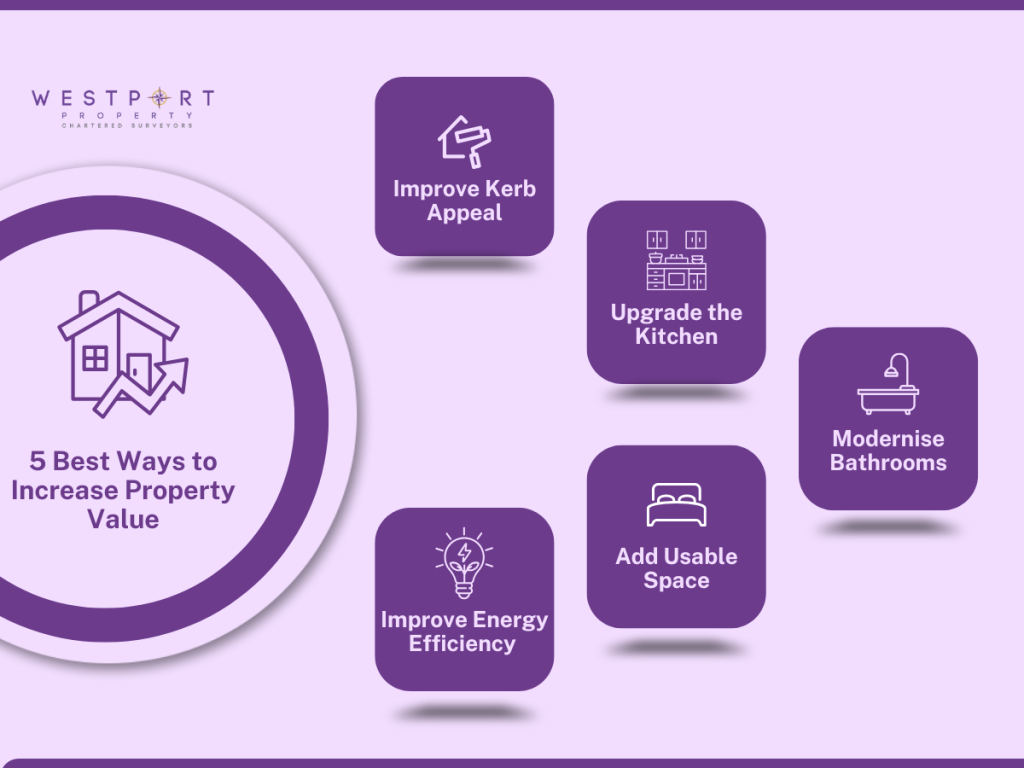
The 5 improvements below highlight what buyers genuinely prioritise, what surveyors look for, and what consistently adds measurable value across the Scottish property market.
Improve Kerb Appeal First
The exterior of a home is the first thing a buyer notices, both in person and in listing photos. Naturally, a property with a more attractive exterior will generate more viewings, leading to stronger competition and potentially higher offers.
You don’t need to spend heavily for major reconstruction. Simple improvements such as the following:
- Freshly painting the front door and exterior walls
- Cleaning and repairing doors and windows
- Pressure-washing the driveway
- Maintaining a tidy front garden
- Replacing or updating worn fittings
- Keeping exterior surfaces clean and well-maintained
These changes create the impression that the property is well cared for and of higher quality. Adding external lighting to pathways also improves both safety and visual appeal, particularly for evening viewings.
If you have a stone-fronted property, you should ensure the render or pointing is in excellent condition and free from visible damp or damage. Buyers notice these details, and so do surveyors.
Upgrade the Kitchen
The kitchen is one of the most scrutinised rooms in any property. Buyers spend time visualising daily life there, and it is often a deciding factor for potential buyers.
A full kitchen renovation can deliver a strong return, but it is also the easiest place to overspend. Buyers will only pay up to a certain price for a property in your location, regardless of what you install inside it. If your home is worth £250,000, fitting a £30,000 designer kitchen will not automatically increase the sale price to £280,000. A clean, functional mid-range kitchen is usually enough to meet buyer expectations and costs significantly less than a high-end installation.
A full renovation can cost anywhere from £11,500 to over £40,000. If it’s outside of your budget, you can do targeted upgrades that deliver strong results, such as the following:
- Replace cabinet doors and handles
- Install a new worktop
- Update taps and sink fixtures
- Repaint walls in neutral tones
- Add under-cabinet LED lighting
- Upgrade or clean splashbacks
- Improve overall kitchen lighting
Modernise Bathrooms
A clean, modern bathroom is one of the clearest signals of a well-maintained property. Outdated or poorly maintained bathrooms raise concerns about pipework, damp, and general upkeep. This can affect buyers’ confidence and lower the property’s value.
Modernising the bathrooms does not equate to a full replacement. Targeted upgrades can significantly improve the look and feel of the space at a lower cost. You can focus on these targeted updates on bathrooms to improve property value significantly.
- Regrout tiles to refresh appearance
- Replace a dated bathroom suite
- Install a new shower enclosure
- Upgrade lighting for a brighter space
- Fit chrome or brushed brass fixtures
- Replace worn or discoloured fittings
If the bathroom is structurally sound but visually worn out, a cosmetic refresh with new tiles, a re-sealed bath, and a modern vanity unit often costs between £500 and £2,500 and reliably increases the appeal of the room. Full bathroom renovations or building new bathrooms are worth considering when the current layout or suite is functionally poor.
Add Usable Space
More usable space means more value. Adding square footage to a property, whether through a loft conversion, a rear extension, or simply an empty room, is one of the most reliable ways to increase a property’s value in Scotland, UK.
Although not very popular, a loft conversion typically offers the best value for the cost, particularly when it creates an additional bedroom. According to Nationwide Building Society’s research on home improvements, a loft conversion adding a bedroom can increase property value by around 24% in many Scottish UK markets.
Rear extensions and open-plan kitchen-dining layouts are consistently popular with buyers, particularly families. However, demand is gradually shifting towards a “broken plan” layout, which offers similar light and flow but with some separation between spaces.
You should also consider whether the renovation suits the property and whether it offers the best return on investment. Before committing to any structural addition, it is important to check planning permission requirements with your local planning authority.
Improve Energy Efficiency
Energy efficiency matters more to Scottish buyers than it used to. Rising energy bills mean buyers pay close attention to how cheap or expensive a home is to run, and lenders do too.
Your property’s EPC rating measures its energy efficiency, and it’s important to improve the EPC rating. A higher rating means lower running costs, which makes your home more attractive to buyers and opens up more mortgage options for them. A low rating does the opposite; some buyers will negotiate the price down to cover the cost of improvements they plan to make.
The most effective energy efficiency upgrades are the following:
- Loft insulation
- Cavity wall insulation
- Double or triple glazing
- Upgrading to an A-rated condensing boiler
- Installing solar panels (where viable)
- Improving overall EPC rating
- Reducing heat loss through better insulation
In Scotland, many homeowners may also be eligible for grants under the Home Energy Scotland scheme, which can significantly reduce upfront costs.
6 Simple Ways to Increase Property Value Without Major Renovation
Significant value improvements do not always require significant investment. Presentation, maintenance, and atmosphere shape buyer perception and increase the value of your property. Some of the cost-effective ways to increase property value without major renovation are as follows;
- Fresh Paint and Neutral Colours: A fresh coat of paint is one of the most cost-effective ways to improve a property’s appearance. Neutral tones such as soft whites and warm greys make spaces feel brighter, larger, and more appealing to a wider range of buyers.
- Declutter and Stage the Property: Clutter reduces the perceived size of a room and makes it harder for buyers to visualise the space. Before listing, remove non-essential furniture, clear surfaces, and take down heavy personalised items.
- Natural Lighting: Natural light is one of the most-cited features buyers want. Remove heavy curtains, clean windows thoroughly, and use mirrors to reflect light into darker areas.
- Artificial Lighting: You should replace dated overhead fittings with modern alternatives. Warm-toned LED downlights create a welcoming atmosphere in living areas. Cooler task lighting in kitchens and bathrooms reads as modern and practical.
- Fix Small Repairs: Minor defects send a signal about general maintenance standards not being handled properly. A sticking door, a cracked tile, or a broken handle draws the attention of the buyer. Walk through your property before listing and address every small defect. The total cost is often under £500, but the cumulative effect on buyer confidence is significant.
- Update Flooring: Flooring is one of the first things buyers notice and one of the most impactful upgrades in terms of presentation. Worn, stained, or heavily marked carpets immediately reduce the value of a property. Replacing carpets in bedrooms and reception rooms with quality neutral alternatives costs relatively little and makes an immediate visual difference.
What Does NOT Add Value to the Property?
Not every upgrade you do may add value to the property. Understanding what not to do protects your budget as much as knowing what to do.
- Overpersonalized designs can reduce buyer appeal. A kitchen with bold patterns, a bathroom with statement colours, or a highly customised garden can narrow the market. Buyers who need to undo these choices often factor that cost into their offer
- Luxury upgrades in the wrong price bracket rarely pay off. Installing a high-spec kitchen or a swimming pool in a lower-value area increases costs without raising buyers’ willingness to pay. So, you should match the quality of improvements to your local market.
- Poor DIY work can seriously damage a property’s value. Visible issues like uneven tiling, badly fitted units, or non-compliant electrics raise concerns for both buyers and surveyors. Using certified tradespeople provides the reassurance and documentation buyers expect.
- Overbuilding for the area is another common mistake. Extending or upgrading beyond the standard of nearby homes will not push the value higher than local price ceilings, no matter how much is spent.
How Much Value Can You Add to Your Home?
The uplift achievable through home improvements varies considerably based on property type, location, current condition, and local market conditions. No improvement carries a guaranteed return, so it is important to consider these factors carefully before making any upgrades to a property.
As a general guide, based on UK property research, loft conversions that add a bedroom are associated with value increases of up to 20% to 25% in suitable markets. Kitchen improvements typically deliver returns of around 5% to 6% and can reach up to 14.05% when the investment is proportionate to the property’s price bracket. Improving a bathroom can add around 4% to 5% to the overall property value. Energy efficiency upgrades and kerb appeal improvements also have a strong impact on saleability, which in competitive markets often leads to stronger offers.
Ultimately, the return depends on the planning, execution, and alignment of each improvement with buyer expectations. High-quality workmanship, practical design choices, and improvements that suit the property type and local market will deliver the strongest results. Understanding your local market through an experienced agent or chartered surveyor gives you the most reliable basis for decision-making.
Conclusion
Increasing property value requires a careful balance between investment, practicality, and market expectations. The most effective improvements are not always the most expensive, but the ones that enhance how a property is presented, used, and perceived by buyers and surveyors. At the same time, avoiding common mistakes, such as overpersonalization, overspending, or poor-quality work, is just as important.
Anyone looking to increase property value in Scotland, UK, should make informed, balanced decisions that align with the property and its surroundings. When improvements are planned with purpose and executed to a high standard, they work together to strengthen appeal, increase confidence, and ultimately support a higher valuation.
If you want to understand more about how to increase the value of your property or are planning to buy, sell, or rent, contact Westport Property. With over 13 years of experience in property management, our expert guidance can help you make informed decisions and ensure your property continues to grow in value over time.
Have A Question or Need Some Help?
Whether you're searching for the perfect rental property or a landlord wanting advice on letting, we're here to assist. Feel free to call our office or send us an email, and we'll be happy to help you with any queries you may have.
Frequently Asked Questions
What increases property value the most?
Adding usable space, through a loft conversion or extension, delivers the strongest return in most Scottish, UK markets. After that, a modernised kitchen, an updated bathroom, and a strong EPC rating consistently make the biggest difference to both buyer interest and valuation outcomes.
What decreases property value the most?
Poor maintenance is the biggest driver of reduced value. Damp, structural issues, and visible signs of neglect raise concerns for both buyers and surveyors. Poor DIY work, outdated electrics or heating systems, and a low EPC rating also negatively affect what buyers are willing to pay.
How long before selling should I make improvements?
For minor improvements, painting, repairs, decluttering, and kerb appeal, two to four weeks before listing is sufficient. For larger upgrades such as a bathroom refresh or new flooring, allow one to two months. Structural work, like a loft conversion or extension, needs to be planned well in advance and is rarely worth starting shortly before a sale.
 Find a Property Sale/Rent
  Property Management
  Tenant Background Screening
  Rent Collection
  Property Maintainance
  Property Inspection
  Property Advertising
  Portfolio Management For Landlords
  Investment & Asset Management