Most landlords focus on finding tenants, protecting rental income, and keeping their properties in excellent condition. Council tax rarely becomes a concern until the property remains empty. When that happens, what seems like a simple question can quickly become confusing. Many landlords assume that if there is no tenant in the property, council tax does not apply. In reality, that assumption is wrong, and it costs landlords money every year across Scotland and the wider UK.
Whether your property is between tenants, undergoing repairs, or vacant for another reason, council tax responsibilities do not automatically disappear. The rules depend on the local council, how long the property has been empty, and whether any exemptions apply.
At Westport Property, we have supported hundreds of landlords in understanding council tax. In this blog, we will guide you through exactly who pays council tax on an empty property, what the rules say in Scotland, what exemptions exist, and how to manage your costs effectively.
What Is Council Tax?
Council tax is a local tax charged by every council in the UK to fund essential services. These include waste collection, road maintenance, emergency services, and social care. Every residential property in the UK is placed in a council tax band based on its estimated value on April 1, 1991, in Scotland and England.
Each property is assigned to one of eight valuation bands, running from Band A at the lowest end to Band H at the highest. The amount you pay is calculated using your band and the rate your local council sets for that financial year.
It is also worth noting that council tax only applies to residential properties. Commercial properties are subject to business rates instead, which follow a separate set of rules entirely.
Do Landlords Have to Pay Council Tax on an Empty Property?
Yes, landlords generally have to pay council tax on an empty property. When a property is not occupied, you become responsible for paying council tax. This applies from the moment the property becomes empty.
The exact amount you pay, and whether any discounts or exemptions apply, depends on 3 key factors:
- The status of the property, such as whether it is furnished or unfurnished, is undergoing major repairs, or has been recently inherited through probate
- How long the property has been empty, as short-term vacancies are treated differently from long-term empty properties
- Your local council’s policy can affect your property, as councils across Scotland and the wider UK have the discretion to apply discounts or charge premiums
Knowing where your property stands allows you to take the right action early and avoid bills that compound over time.
When Does a Landlord Become Liable for Council Tax on an Empty Property?
Landlord liability begins the moment a property becomes unoccupied. In Scotland, according to the SAL, landlords are liable from day one of vacancy. There is no grace period, no automatic buffer, and no minimum number of days before the charge applies.
In practical terms, this means council tax can apply immediately once the property is empty, even if the vacancy is only temporary between tenancies.
In Scotland, the tenant usually handles council tax on a rented property. However, that responsibility shifts to the landlord in four specific situations:
- The property has no tenants and remains vacant between tenancies.
- The property has never been let and remains unoccupied.
- A tenant vacates before their tenancy formally ends, leaving the property empty.
- The property is a House in Multiple Occupation (HMO). In most HMOs, the landlord bears the responsibility for council tax, even during property occupancy.
These situations make it clear that once a property becomes empty, the responsibility for council tax shifts quickly and often without warning to landlords.
What Counts as an Empty or Unoccupied Property for Council Tax?
Not every unoccupied property falls into the same category. Councils in Scotland and across the UK distinguish between different types of empty properties, and the category your property falls into directly affects how much council tax you pay.
- Unfurnished and unoccupied properties are the most commonly charged category. If a property has no furniture and no one living in it, most councils treat it as a standard empty property and charge council tax from the point it becomes vacant.
- Furnished but unoccupied properties, including second homes, are treated differently. These typically face full council tax charges, and in some local authority areas, a premium charge on top.
Each category comes with its own rules, and often, the longer a property remains empty, the more those rules become financially restrictive. A standard charge can significantly increase over time, especially if the property remains unoccupied for an extended period.
How Much is the Council Tax Premium on Long-Term Empty Properties?
The most significant financial risk for landlords with vacant properties is the long-term empty homes premium. This is an additional charge added on top of the standard council tax rate for properties that remain empty beyond a defined threshold.
In Scotland, councils have the legal authority to apply a 100% premium on properties that have been empty for more than 12 months. At 100%, the landlord pays double the standard council tax rate for as long as the property remains vacant. The legal basis for this power is the Council Tax (Variation for Unoccupied Dwellings) (Scotland) Regulations 2013.
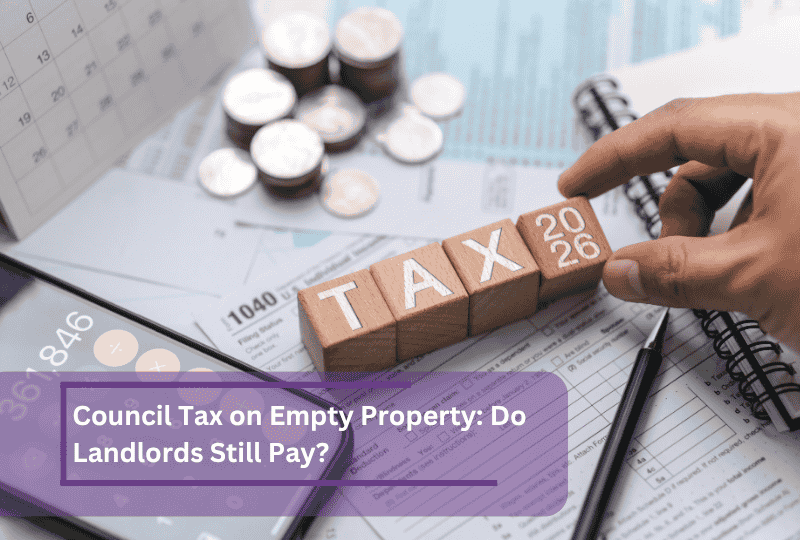
From April 1, 2026, properties that have been empty for 12 months or more will see a significant change in council tax charges. In most cases, the bill can increase upto 200% to even 300% of the standard rate, meaning three times the usual annual amount, as long as the property continues to remain vacant beyond that point.
However, this does not apply in every situation. If the property qualifies for a statutory exemption or discount, the additional charge may not be applied.
Are There Any Council Tax Exemptions for Empty Properties?
Several exemptions allow landlords to apply for a full reduction in council tax while a property is empty. These exemptions are not applied automatically. You need to apply to your local council and meet specific qualifying conditions.
Properties Undergoing Major Repairs or Structural Alterations
When the property is undergoing a major repair, it qualifies for an exemption in many councils. The property must be genuinely uninhabitable during the works, not simply undergoing routine maintenance or redecoration.
Most councils cap this exemption at 12 months, and some require evidence such as a contractor’s quote, planning permission, or a surveyor’s report before approving it.
Unoccupied Properties Under Repair or New Ownership
If you become the owner of an unoccupied property that requires structural work, and it has been more than 12 months since it was last occupied, a specific exemption may apply.
Separately, if you have recently become the new owner of an unoccupied property (within the last six months) and are actively carrying out repairs or renovations, you may qualify for an exemption during this period while the work is underway.
Probate Exemptions
This exemption applies in an unfortunate case if the owner of a property has passed away. In most cases, council tax is exempt for up to six months after a grant of probate or letters of administration is issued. This prevents the deceased person’s estate from accumulating council tax liability while legal and financial affairs are resolved.
Owner Receiving Personal Care
If the owner has moved into a care home, hospital, or similar facility to receive personal care on a long-term basis, and the property stands empty as a result, the property is exempt from council tax for as long as those circumstances continue.
Owner is Detained in Prison
This is a separate but equally valid exemption. If the property owner is serving a custodial sentence and the property is empty as a direct result, the property qualifies for a council tax exemption for the duration of the detention. This exemption does not apply if the owner is imprisoned for non-payment of council tax itself.
Property Actively Marketed for Sale or Rent
If a property is actively being marketed for sale or rent, it qualifies for an exemption for up to 24 months after the last occupation date. The property must be genuinely on the market, not simply listed without effort or intention to let or sell within a reasonable timeframe.
Legal Restrictions on Occupation
If a property is subject to a closing order, prohibition notice, or other legal restriction that prevents occupation, the owner cannot be held liable for council tax while those restrictions remain in place.
To apply for any exemption, you should contact your local council and provide the relevant supporting evidence. Make sure to keep all documentation, care home agreements, solicitor correspondence, structural repair quotes, and legal notices. Councils regularly request these documents to verify eligibility. Exemptions are not always backdated to the start of the qualifying period, so applying early is always the right move.
5 Practical Tips to Reduce Council Tax on an Empty Property
There are clear, practical steps landlords can take to manage and reduce their council tax liability when a property is empty.
Notify Your Council Immediately When a Property Becomes Vacant
Councils need accurate records to apply the correct charges from the right date. Early notification also opens the door to applying for any available exemption or discount before bills build up. Waiting until a notice arrives is always the costlier approach.
Apply for Exemptions as Soon as You Qualify
If your property is undergoing major repairs, the owner has moved into care, or the property has been recently inherited, submit the relevant exemption application without delay. Many councils do not backdate exemptions beyond a short window, meaning every week of delay is a week of avoidable cost.
Reduce Void Periods Wherever Possible
The longer a property sits empty, the greater the council tax liability. Efficient tenancy changeovers, through prompt marketing, thorough referencing processes, and aligned tenancy start dates, reduce the number of days you pay as the liable party. Even shortening a void period from eight weeks to four weeks has a measurable financial impact.
Keep Detailed and Organised Records
Document the exact date each tenancy ends, when new tenants move in, all works carried out on the property, and every piece of correspondence with your council. Clear records protect your position if a liability dispute arises and ensure exemption applications are supported with the evidence the council needs to process them quickly.
Work With a Professional Property Management Company
A good property management company monitors void periods closely, handles council notifications on your behalf, manages exemption applications, and ensures tenancy turnover happens efficiently. The cost of hiring a professional management company is usually less than the savings from lower council tax during empty periods and the extra fees that build up on badly managed vacant properties.
Conclusion: Managing Council Tax on Empty Properties Effectively
Council tax on an empty property is not something landlords can afford to overlook. Once a tenant moves out, liability passes to the owner, and in most cases, charges begin immediately. The longer the property stays empty, the more expensive those charges become, particularly in Scotland, where long-term empty homes premiums can double the annual council tax bill for properties vacant beyond 12 months.
The good news is that with the right approach, those costs are manageable. Understanding which exemptions apply, acting early, communicating proactively with your local council, and keeping void periods short all make a real and measurable difference to what you pay.
If you are still confused about council tax, or manage multiple properties, or find it difficult to control void periods in Dundee and the surrounding areas, Westport Property is here to help. With over 13 years of experience in property management, we take the guesswork out of the process and keep you compliant and in control of your costs.
Have A Question or Need Some Help?
Whether you're searching for the perfect rental property or a landlord wanting advice on letting, we're here to assist. Feel free to call our office or send us an email, and we'll be happy to help you with any queries you may have.
Frequently Asked Questions
How long can a property be empty?
In Scotland, council tax applies from day one of vacancy. From April 1, 2026, properties empty for 12 months or more face a charge of up to 300% of the standard rate.
What happens if you do not pay council tax on an empty property?
Unpaid council tax is a legal debt. In Scotland, your council can pursue it through a summary warrant, allowing them to recover the amount directly from your earnings or bank account. Do not ignore it, contact your council early.
Can you appeal a council tax decision on an empty property?
Yes. If charges have been applied incorrectly or an exemption has been refused, you can request a formal review from your local council. If unresolved, you can escalate to the Valuation Appeal Committee in Scotland.
Does council tax apply to a property empty due to flooding or fire damage?
A property that is genuinely uninhabitable due to flood or fire damage qualifies for an exemption in most Scottish councils. You will need supporting evidence, such as an insurance report or structural survey, to apply.
 Find a Property Sale/Rent
  Property Management
  Tenant Background Screening
  Rent Collection
  Property Maintainance
  Property Inspection
  Property Advertising
  Portfolio Management For Landlords
  Investment & Asset Management